Field record 04
Orange Walk · Belize · After 2013
From playing games to building them
The most interesting students were not necessarily the most compliant. They were the ones testing limits, finding workarounds, and teaching one another what they discovered.
Working story · Facts and publication permissions are being verified before launch.
Care
The project began with an unusual question for the school principal: who are the troublemakers?
The question was not really about discipline. It was a way of finding the students whose curiosity was already visible—the ones who tested restrictions, found their way around technical limits, and then showed their friends what they had discovered. Their behavior suggested an opportunity that ordinary classroom measures might miss.
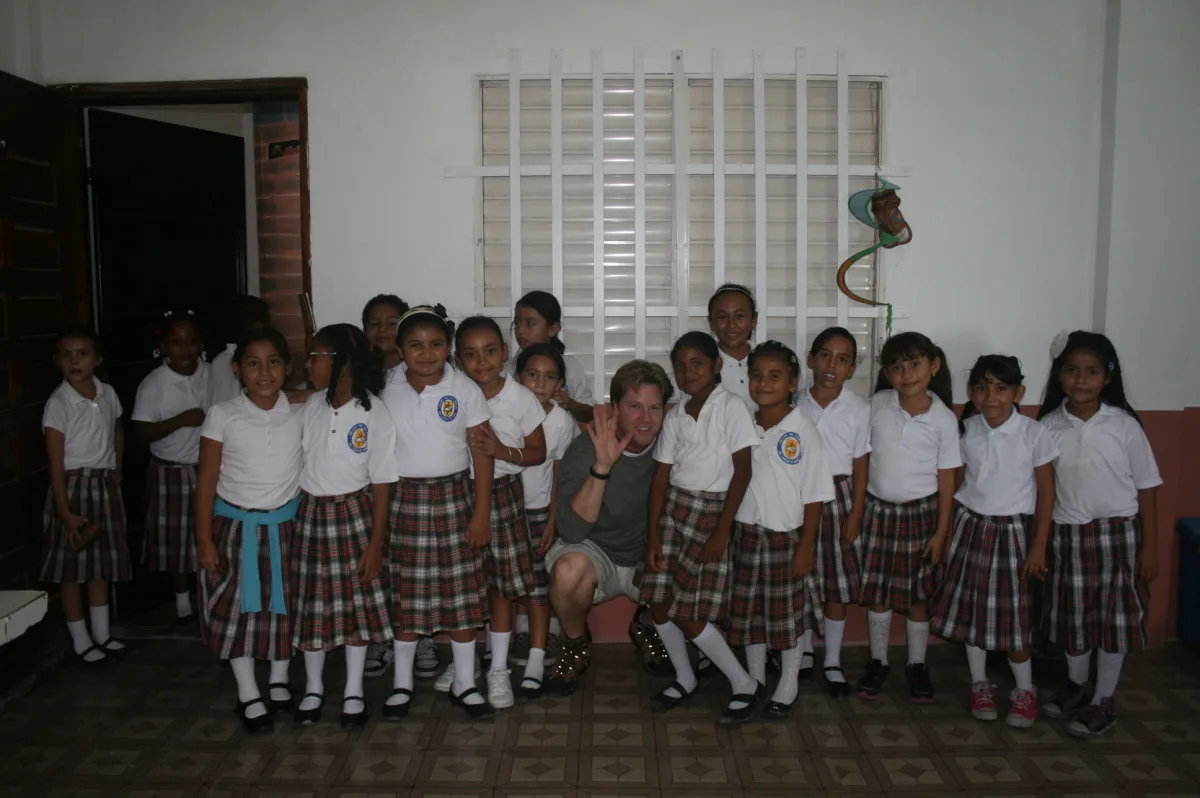
Five students were identified. Instead of asking them to become better consumers of educational technology, the foundation invited them into an after-school class where they could learn how games and software are made.
Share
Game design provided the teaching frame. A game gives a young creator an immediate reason to think in systems: define rules, anticipate choices, solve problems, test an idea, find what breaks, and revise it.
The equipment was already available. What changed was the expertise brought to it. The students moved from exploring finished apps to learning the logic and process behind building something of their own.
The class was small by design. Five students meant the teaching could follow curiosity closely, make room for experimentation, and treat unusual questions as evidence of potential rather than distraction.
Grow
One of those five students was Aziel. He responded to the creation side of technology and kept moving through the openings that followed. What began with game building became a longer interest in software, products, and entrepreneurship. He later built technology companies of his own.
The relationship continued beyond the original class. Teacher and student still speak regularly, but the conversation has changed. It now includes products, investment decks, business decisions, and the problems entrepreneurs work through together.
That continuity is as important as the first lesson. Aziel did not emerge because a device was delivered. He emerged because someone noticed the way he was already thinking, connected that curiosity to relevant expertise, and kept the door open as his questions became more ambitious.
Repeat
The game-design project revealed a second opportunity inside the earlier Belize work. Classroom access had helped students use technology. This project asked which students might be ready to shape it.
The lesson is repeatable without prescribing the outcome: look for curiosity that is already trying to escape its boundaries, find the expertise that can give it form, and stay available as the student outgrows the original lesson.
Find the creator. Share the craft. Keep the conversation going.
Open record
- Confirm the class date, instructor, curriculum, and game-building platform
- Clarify whether the recovered 2018 Belize travel records belong to this project
- Document the other four students’ work and what followed the class
- Review Aziel’s company history and current story with him before publication
- Confirm permission for photographs, the recovered testimonial video, and direct quotations